Above the Funnel: Sales FAQ
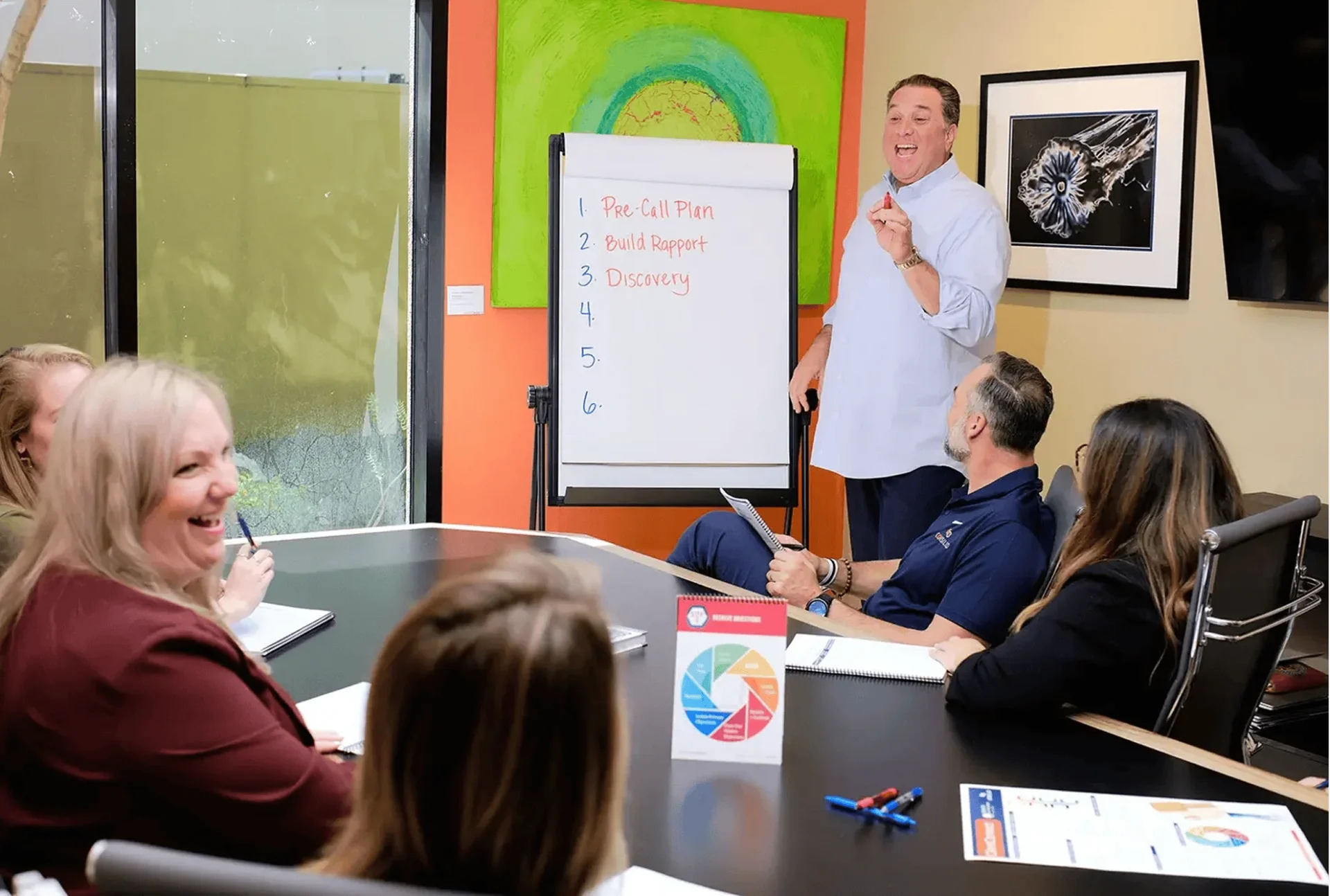
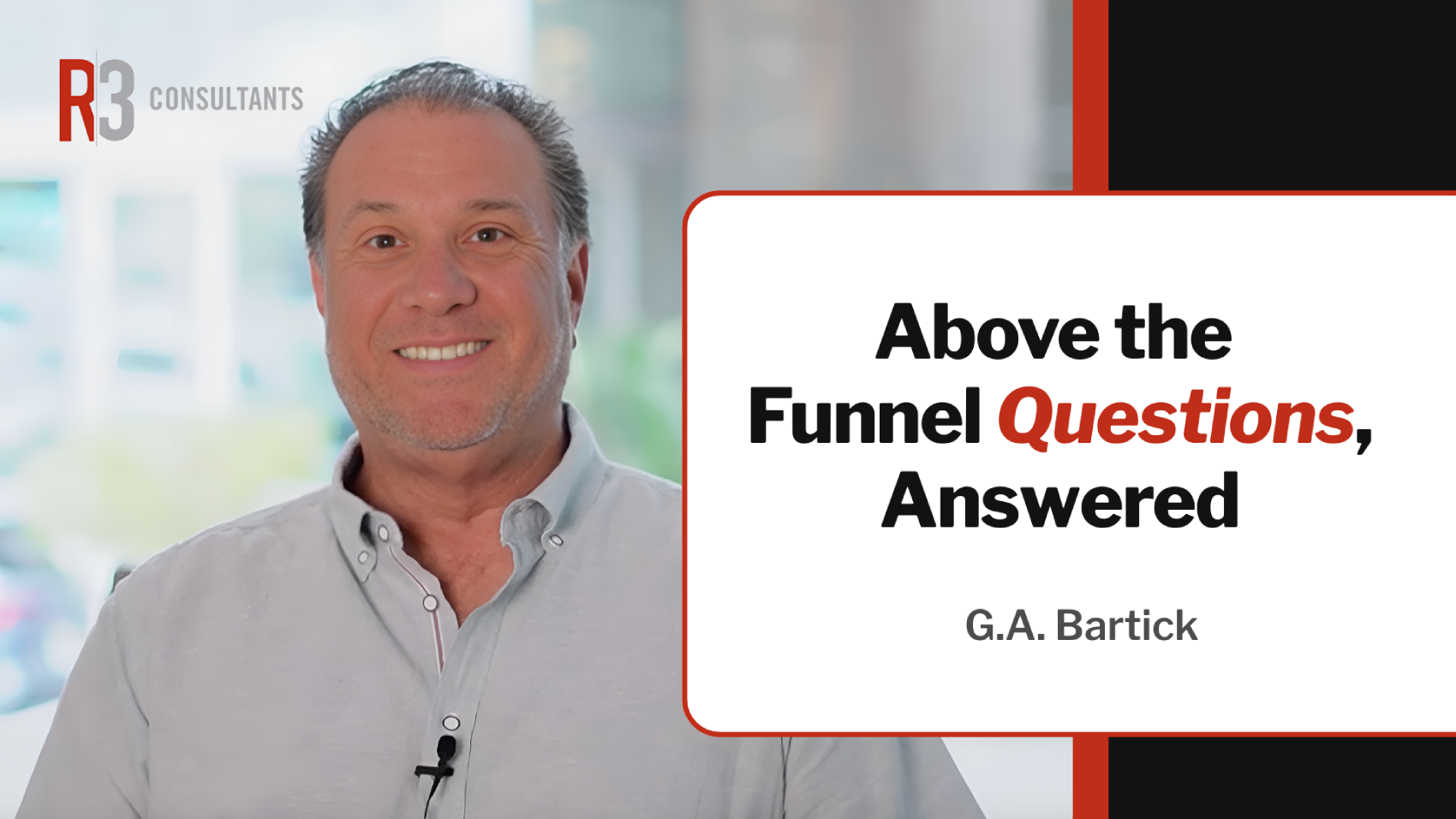
Sales success isn’t just about closing it’s about creating tomorrow’s pipeline. In this FAQ, G.A. Bartick explains “above the funnel” work: prospecting, marketing, networking, and outreach that generate new conversations. Many reps live at the bottom of the funnel, pushing deals across the finish line while neglecting demand creation. The result is predictable: short-lived spikes followed by dry spells. Top performers avoid that trap by time-blocking prospecting, protecting it on their calendars, and using multiple channels phone, email, LinkedIn, events, and referrals to keep lines in the water. Treat above-the-funnel activities as daily or weekly commitments and manage to leading indicators like new conversations and first meetings set.
FAQs
What does “above the funnel” mean?
Short answer :
Work that creates new opportunities marketing, cold calls, emails, networking, and brand visibility before deals ever enter the pipeline.
Long answer :
“Above the funnel” is everything you do to start conversations with prospects who aren’t yet in your pipeline. As Bartick frames it, top sellers go beyond working active deals and invest time in activities that get their name into the market: marketing touches, cold calling, emails, networking events, even cold door-pulling when appropriate. These actions seed the deals you’ll close later. Without them, there’s nothing to move through the funnel tomorrow. Think of it as demand creation, not deal advancement an essential discipline, not an optional extra.
Why do salespeople ignore it?
Short answer :
Urgent late-stage deals crowd out prospecting, so above-the-funnel work quietly disappears.
Long answer :
Most reps “immediately start working… the bottom of the funnel.” That’s the right place to begin, but problems arise when the day ends there. The pressure of near-term revenue and internal fire drills makes prospecting feel deferrable, and Bartick notes that marketing time “vanishes like that.” Over days or weeks, reps get “so bogged down” that above-the-funnel work doesn’t happen sometimes for entire quarters leading to the familiar ebb-and-flow cycle. The fix is structural, not motivational: schedule and protect prospecting like a mission-critical meeting.
How often should prospecting happen?
Short answer :
Daily if possible; at minimum, protected weekly blocks that never slip.
Long answer :
Bartick emphasizes that above-the-funnel activities “need to happen on a daily, weekly basis.” Aim for daily 60–90 minute blocks; if that’s not feasible, establish multiple weekly sessions and defend them. Front-load prospecting early in the day right after clearing true last-mile tasks so it isn’t sacrificed to reactive work. Prepare lists and scripts ahead of time to remove friction at go-time. Consistency beats intensity; a modest, reliable cadence outperforms sporadic sprints. Track completion and coach to quality weekly.
What happens when it’s ignored?
Short answer :
Pipelines dry up and revenue drops weeks or months later classic “ebb and flow.”
Long answer :
Neglecting above-the-funnel work creates lagging pain. You’ll see a burst of closings from work done months ago, then “you got nothing.” This volatility makes forecasting harder and stresses teams. Leaders misdiagnose the problem as closing skill when the root cause is empty top-of-funnel input. The remedy is to institutionalize demand creation: scheduled prospecting, multi-channel outreach, and coaching on leading indicators such as new conversations and first meetings set. Prevention is far cheaper than emergency pipeline generation.
Is LinkedIn enough?
Short answer :
No. Use multiple channels phone, email, LinkedIn, events, and referrals.
Long answer :
Relying on LinkedIn alone is fragile. Algorithms change, audiences fatigue, and inboxes overflow. Bartick is explicit: “going on LinkedIn or maybe send an email, that’s not enough. You have to have multiple prongs, multiple lines of fishing hooks out in the water.” Combine targeted calls, tailored emails, social touches, industry events, and partner referrals. Rotate touches over 10–15 business days, personalize by trigger, and measure which combinations create first conversations most efficiently.
Why schedule prospecting?
Short answer :
If it isn’t on the calendar, urgent work will erase it; scheduling prevents neglect.
Long answer :
Top performers “actually time… and put that into their calendar right there, top of the funnel activities.” Scheduling creates a forcing function and a team-wide norm: what gets calendared gets done. Protect these blocks from internal meetings and treat reschedules as same-day, not next-week. Leaders should inspect calendars in one-on-ones and coach to adherence and quality. Over time, this routinizes demand creation so your pipeline never depends on sporadic bursts of energy.
What separates top performers?
Short answer :
They balance closing with consistent above-the-funnel work and defend it with time blocks.
Long answer :
High performers start at the bottom “get those deals closed” then move deliberately above the funnel to create tomorrow’s pipeline. They don’t wait for free time; they schedule and protect it. They also diversify channels and measure leading indicators. This combination prioritization, time-blocking, and multi-channel execution keeps opportunities flowing, reduces variance, and makes results predictable. It’s discipline, not heroics.
Does this apply to all industries?
Short answer :
Yes. Any business relying on new conversations and pipeline benefits from above-the-funnel discipline.
Long answer :
While tactics vary by market, the principle is universal: without consistent demand creation, pipelines thin out. Whether you’re B2B services, manufacturing, SaaS, or field sales, you must balance closing with prospecting. The specific channels events vs. calls vs. door-pulling shift by context, but the operating system remains: schedule prospecting, use multiple channels, and manage to leading indicators. That’s why Bartick emphasizes daily/weekly cadence regardless of niche.
Can teams adopt this approach?
Short answer :
Absolutely make it cultural: shared prospecting blocks, enablement, and coaching.
Long answer :
Codify a cadence: team-wide prospecting blocks, protected from meetings; prebuilt lists and messaging; and weekly reviews of leading indicators. Managers should model the behavior and inspect calendars. Record and review call snippets, refine templates, and debrief events quickly. Celebrate consistency, not just end-of-quarter wins. Over a few cycles, the organization internalizes above-the-funnel discipline and pipeline smooths out.
Who can help implement it?
Short answer :
G.A. Bartick and R3 Consultants can train leaders and operationalize the system.
Long answer :
If you want this operating system in place fast, partner with experts. Bartick can teach managers how to prioritize, schedule, and coach above-the-funnel work, while R3 Consultants helps you build the cadence, tools, and metrics that make it stick. From role design to call frameworks and channel mix, they’ll help you institutionalize the behaviors that keep “multiple lines of fishing hooks out in the water” every week.
Conclusion
Above-the-funnel work is the antidote to boom-and-bust sales. Schedule it, diversify channels, and manage to leading indicators. As Bartick says, start by closing what’s near the finish but then move above the funnel, every day or every week, without fail. That’s how you build a pipeline that never runs dry.
Contact Us
Ready to turn prospecting discipline into predictable revenue? Give us a call at +1 (833) 737 3785 and ask for G.A. Bartick to train your managers on above-the-funnel execution to operationalize the cadence, metrics, and coaching across your team.